
White or Cloudy Paver Sealer
What to Check Before Adding Another Coat
Published October 7, 2026 · Krystal Klean Exterior
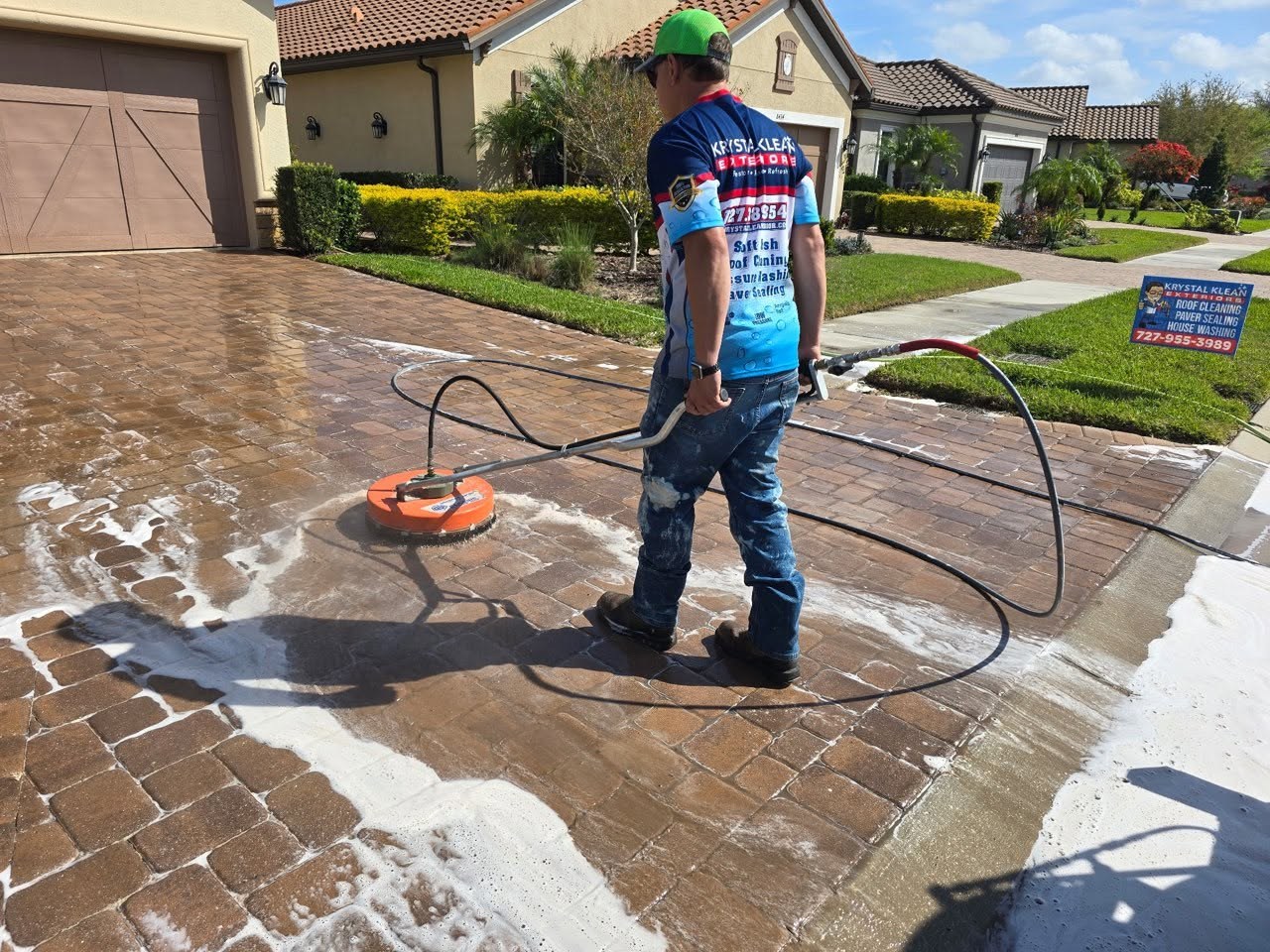
If your pavers look white, cloudy or uneven after sealing, pause before adding more product. A fresh coat can leave the original problem in place and make the eventual correction more involved. The useful first question is where the white appearance is coming from: the coating, material underneath it or a deposit on the surface.
For a Tampa Bay driveway, patio or pool deck, start with the application history and a close look at the affected area. Several different conditions can produce a similar appearance. These checks will help you explain what you are seeing and ask for the right assessment.
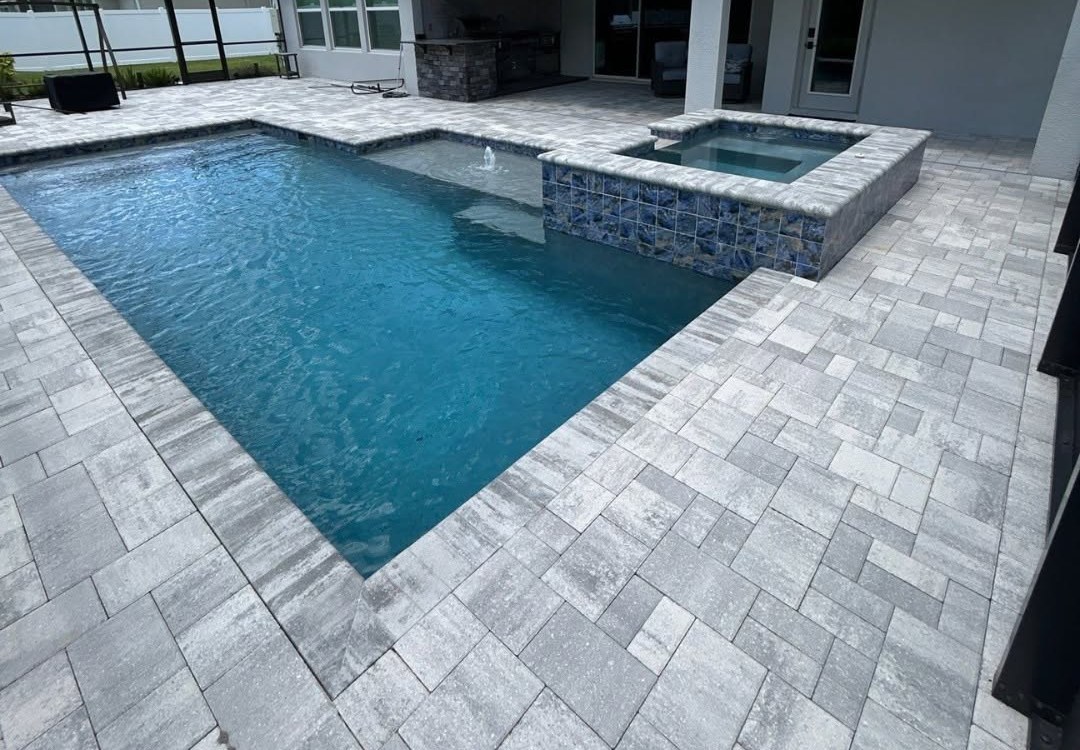
Check when the cloudiness appeared
Was the sealer applied this morning, last month or several years ago? That timeline matters. Some water-based products look milky while wet and become clear as they dry. Trident's Hurricane EZ technical sheet is one example. A freshly applied milky finish, by itself, does not establish that the coating has failed.
Find the exact product name and ask the installer about its expected drying and curing conditions. Dry to the touch and fully cured are different stages. Avoid applying a universal waiting period from an unrelated product. If cloudiness persists beyond the expected cure, spreads or develops after the finish had been clear, document it and arrange an assessment.
Separate moisture problems from other causes
Moisture can contribute to whitening in some film-forming sealers. Euclid Chemical explains that applying a solvent-based acrylic to wet concrete, or allowing heavy coats to build up, can interfere with adhesion and leave a white appearance. Its guidance also identifies a different problem in water-based acrylics: unsuitable temperature or humidity can prevent the coating from forming properly.
Look for a pattern without treating that pattern as proof. Did the change follow rain or irrigation? Is it concentrated beside a drain, along a shaded edge or in a low spot? Does the same area stay damp longer than the rest? Write those observations down. They give an inspector useful leads, but a photo or weather pattern alone cannot identify the chemistry of an unknown sealer.
Consider efflorescence and surface deposits
Efflorescence is a mineral deposit that can look powdery or whitish. It forms when water transports soluble salts through porous material and then evaporates, leaving the salts behind. Techniseal describes this process in its efflorescence guidance. It can occur on concrete pavers and other masonry, so white pavers do not automatically mean white sealer.
The location of the deposit affects the correction. An inspector needs to determine whether it sits on the exposed surface or is beneath a coating. Residue from polymeric joint sand is another possible source of haze. If cleaning or re-sanding happened shortly before the change, include that in the history. Tell the contractor what work was done and which materials were used, even if you are unsure which step caused the problem.
Check the history of earlier coats
Gather invoices, container photos or the previous contractor's product information. Include older sealing work, not only the latest application. The same general description, such as wet look or water based, does not establish that two products are compatible.
For its INCRETE CLEAR SEAL product, Euclid specifically warns that heavy application and repeated buildup can lead to whitening, bubbling and peeling. That product-specific warning is a useful reason to investigate existing layers before recoating. It is not a repair recipe for every sealer.
If you can see peeling edges, flakes or bubbles, photograph them. Adding more material cannot restore the bond of an already loose layer. If the product history is unknown, say so rather than choosing another coating by its advertised finish.
Avoid experimenting with a chemical fix
Concrete pavers, clay brick and natural stone need product choices suited to their material and condition. A treatment suggested for one coating may be unsuitable for another. Skip improvised chemical combinations and aggressive attempts to blast the white area away. Ask for a small, controlled test and a correction method based on the identified surface and sealer.
Before the visit, take a wide photo of the whole area, close-ups of the worst patches and a photo of the joints. Note when the appearance changed and whether earlier repairs were attempted. Keep any remaining product labels available. This gives the contractor more to work with than a close-up alone.
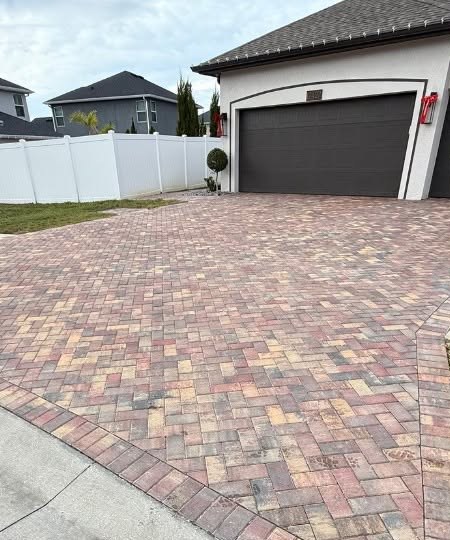
Decide on correction after the inspection
A cloudy finish does not automatically require a full strip. Depending on the findings, the appropriate next step may be maintenance, cleaning, a limited correction or removal of failed coating. Ask what the inspection established, why that scope is recommended and whether a small repair can blend with the connected area. Existing damage or deep staining may remain visible after restoration.
For white, cloudy or peeling paver sealer in Tampa Bay, Krystal Klean Exterior can assess the coating, paver material, joints and drainage before recommending the next step. Visit our paver stripping and restoration page to request an inspection. Bring the product history and photos so the recommendation can start with the condition of your pavers.