
Wet-Look vs. Matte Paver Sealer: Which Should You Choose?
Published April 15, 2026 · Krystal Klean Exterior
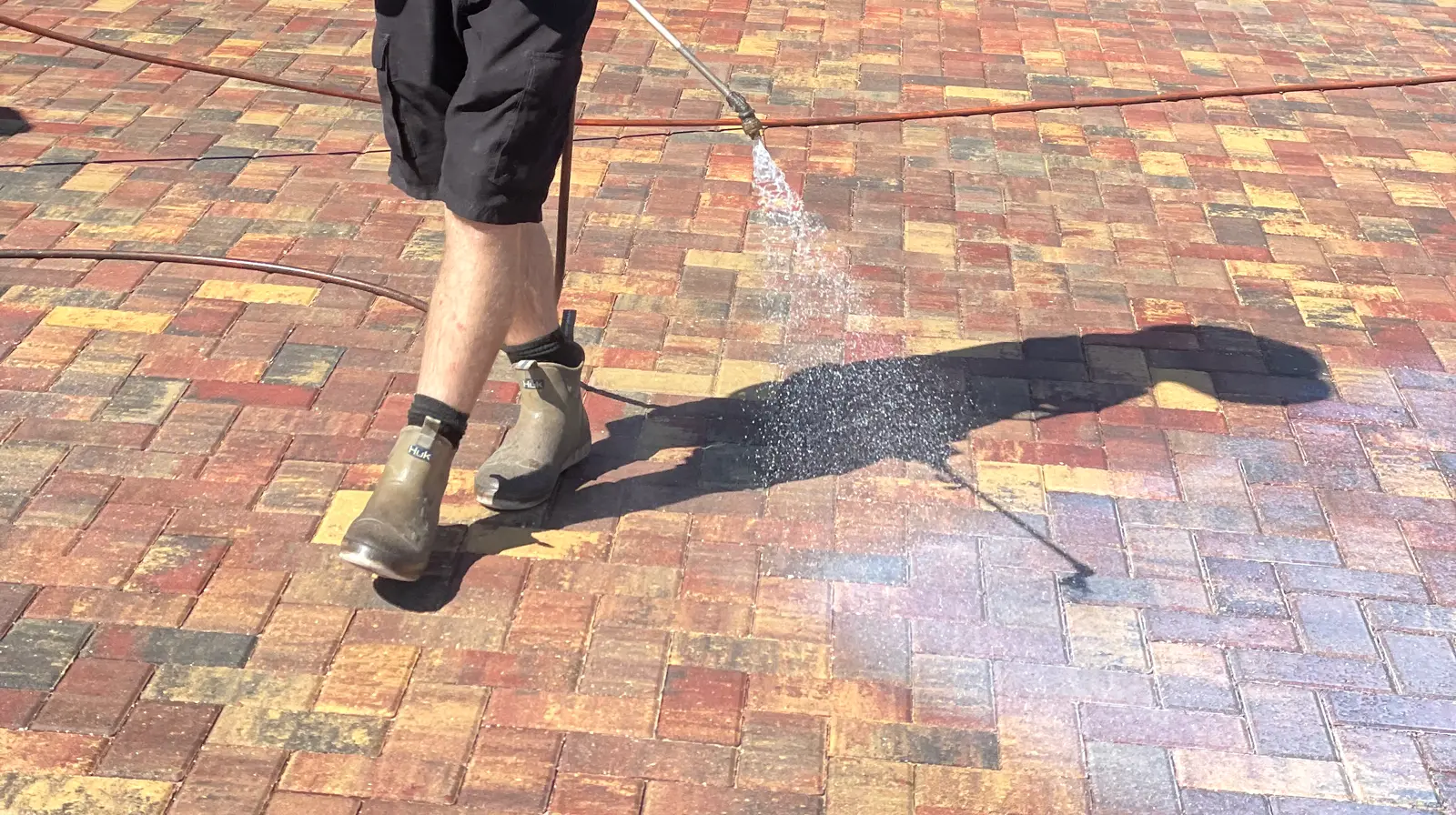
Glossy wet-look or natural matte? The key differences, the maintenance trade-offs, and our honest recommendation.
The choice between wet-look and natural matte sealer is one of the few meaningful decisions you make on a paver job. Neither is better across the board. The right pick depends on the surface and how it gets used. Here is what actually matters.
Wet-look sealer (high gloss)
Wet-look sealer sits on the surface and leaves a glossy finish, so pavers look like they were just rained on. It deepens the color a lot, which is great for red, tan, or blended pavers that have washed out in the sun.
Pros: dramatic color, a fresh "new paver" look, very photogenic, strong curb appeal. Cons: shows wear sooner (a re-coat every 2 to 3 years), can show tire marks on driveways, and can be slick when wet unless a slip additive is mixed in.Natural matte sealer (invisible finish)
Natural matte sealer soaks in and protects without changing how the paver looks. Same color before and after, just sealed.
Pros: lasts 3 to 4 years, no slippery-when-wet issue, hides tire marks and traffic lanes, understated. Cons: no color pop. If your pavers are already faded, matte will not bring them back.For screened pool decks and driveways in north Pinellas, see our Palm Harbor paver and exterior service guidance, including the finish, traction and preparation factors we inspect.
What we usually recommend, by surface
- Driveways: matte, most of the time. Tire marks and foot traffic show on gloss.
- Pool decks: matte with a slip additive, or wet-look only if it is rated deck-safe. Footing comes first.
- Front walkways and patios: wet-look shines here. Low traffic, high visibility.
- Old or faded pavers: wet-look, because you will love how the color comes back.
- Newer or already-colorful pavers: matte is plenty.
Quick decision guide
- You want curb appeal for a front entry: wet-look is usually the better visual choice.
- You park cars on it every day: matte usually hides tire marks and wear better.
- Kids or guests walk barefoot around a pool: prioritize traction, then choose the finish.
- The pavers are already dark or richly colored: matte may protect them without making the surface look overly glossy.
- The pavers are chalky and faded: a color-enhancing sealer can make the biggest visible difference.
Pool deck traction comes first
Around pools, the finish decision is not just appearance. Splash-out, sunscreen, bare feet, and screen-enclosure shade all affect traction. If the pavers already get slick, we talk about cleaning method, sealer type, and slip additive before we talk about gloss. A beautiful pool deck that feels unsafe is not a good outcome.
Driveway durability comes first
Driveways get tires, turning marks, oil drips, and direct afternoon sun. A glossy wet-look driveway can look great on day one, but it also shows wear faster in traffic lanes. If the driveway is the main surface, matte or a softer enhanced finish is often the more practical recommendation.
The Tampa Bay angle
Our sun is hard on gloss. A wet-look finish on a west-facing driveway that bakes all afternoon will dull faster than the same finish on a shaded front walkway. If you want the wet-look pop in a high-sun, high-traffic spot, plan on the shorter reseal cycle as part of the deal.
The rainy season matters too. Gloss finishes that get applied over damp pavers are more likely to haze, especially on shaded lanais and pool decks. That is why the prep and dry window matter as much as the finish choice.
Can you mix finishes?
Yes, and a lot of our customers do. Matte on the driveway, wet-look on the front walkway to the door. It looks intentional and lets each surface play to its strength.
What we check before recommending a finish
We look at sun exposure, slope, drainage, old sealer, traffic, and how the surface is used. A Palm Harbor pool deck under a screen enclosure is not the same decision as an open New Port Richey driveway or a Tarpon Springs front walkway. If the old coating is peeling or cloudy, finish choice comes later. The first decision is whether the surface needs stripping and restoration before any new sealer goes on.
Cost and maintenance difference
Wet-look systems can cost a little more and usually need closer maintenance because the finish sits more visibly on the surface. Matte sealers tend to be more forgiving on daily-use areas. In both cases, the life of the job still depends on cleaning, dry pavers, full joint sand, and a sealer matched to concrete pavers or travertine. The finish does not rescue poor prep.
If you are selling the home
For pre-listing work, wet-look on a front walk or entry can make photos pop, while matte on a driveway can keep the surface cleaner-looking through showings. If time is tight, send photos early so we can tell whether the pavers are a straightforward seal or whether old coating issues could slow the schedule.
A clean, freshly protected entry also makes the roof, house wash, and landscaping look more intentional in listing photos. It is one of the few exterior upgrades buyers notice immediately.
What sample patches prevent
A small test patch helps prevent two common surprises: the finish looking shinier than expected, or the color enhancement revealing stains that need more prep. It also lets you compare the sealer in natural Tampa Bay light instead of judging from a filtered photo online. The best finish is the one that works on your pavers, not someone else's driveway.
A common regret we help people avoid
The biggest one: choosing wet-look off a photo online, then disliking the shine in person, or finding a deck slick underfoot. That is why we bring samples and lay both finishes on your own pavers before anything is committed. No pressure, no guessing.
Text photos to 727-579-7825 and we will tell you what we would pick for your project. See the full paver sealing process, or our cleaning and re-sanding step that comes first.