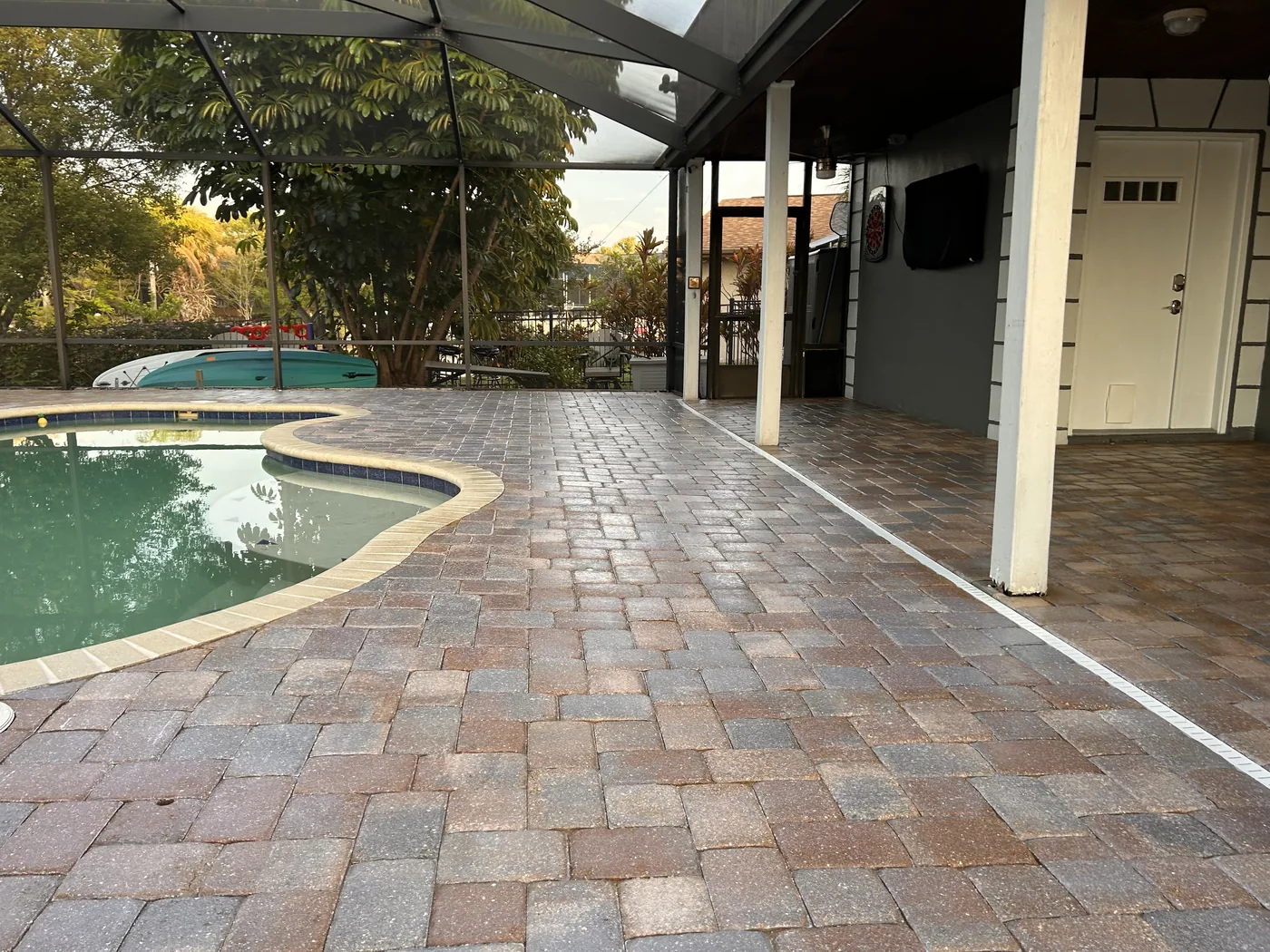
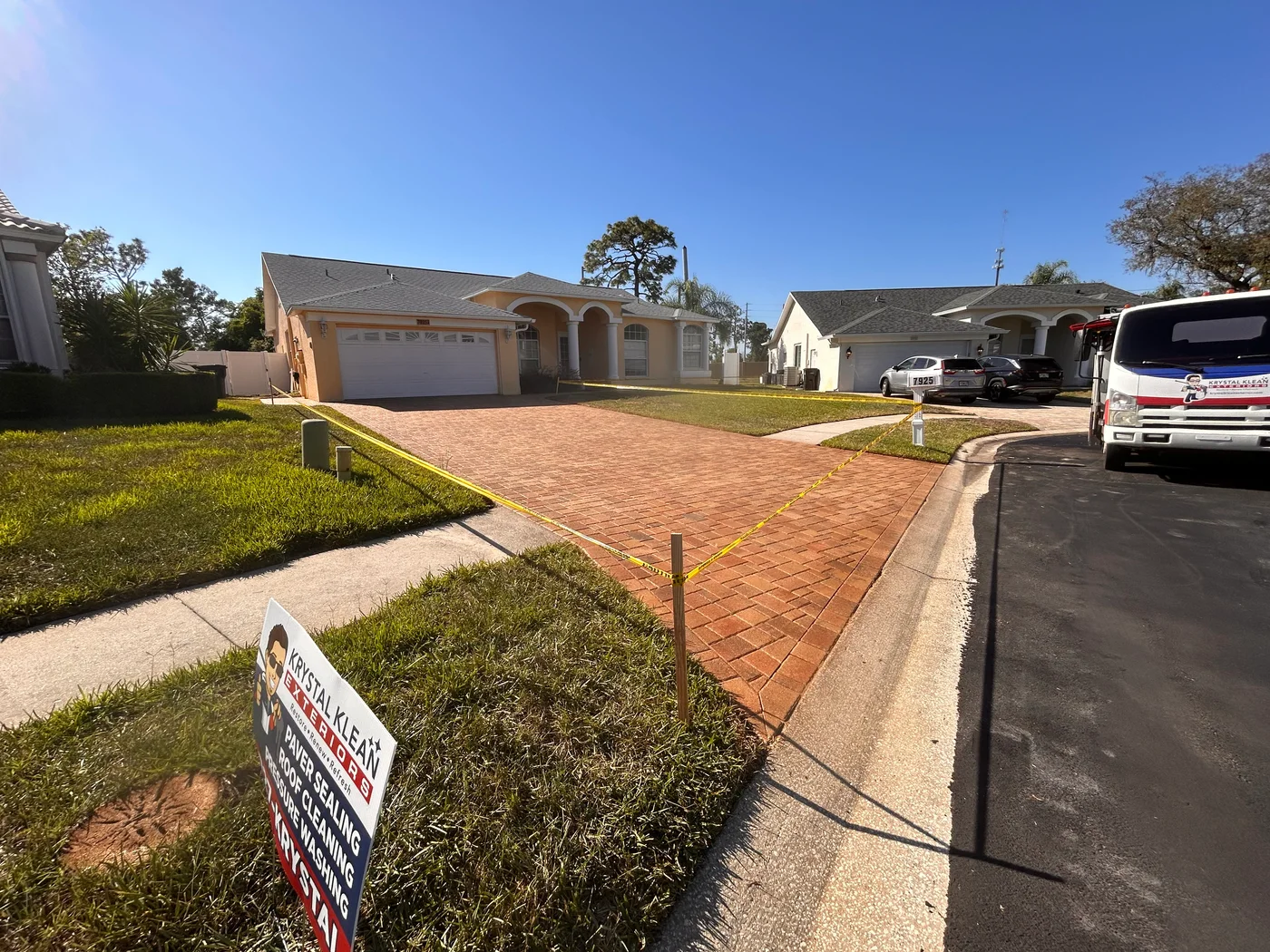
Diagnose white haze, peeling sealer, trapped moisture and uneven sheen before deciding whether the surface needs cleaning, partial correction or a full strip.
Moisture exposure, shade and slower drying can narrow the safe window for stripping and resealing. The important question is not whether the property is near the coast, but whether the pavers and joints are dry enough for the selected system and whether drainage can keep moisture from returning beneath it.
St. Petersburg properties can include concrete pavers, clay brick, travertine and other natural stone. A removal method appropriate for an acrylic coating on concrete may be the wrong starting point for a more porous stone or an older clay surface. We identify the material, inspect the joints and test a contained area before recommending a full process.
The test is used to judge how the existing layer releases, whether pigment or old coating remains in low areas and how the exposed surface responds to water. It also gives the homeowner a realistic picture of permanent fading, wear and staining that coating removal cannot reverse.
Shade, frequent moisture and limited airflow can extend the time needed between cleaning, stripping, joint work and resealing. Pool decks and waterside walkways also need a separate conversation about wet-foot traction; the glossiest finish is not automatically the best choice for every walking surface.
Before a replacement coating is considered, we check runoff paths, low areas and the moisture condition of the pavers and joints. When the field is not ready, the responsible recommendation is to wait or correct the underlying condition rather than trap moisture under a new film.
Review the complete paver stripping and restoration process or request an inspection-based estimate for the connected surface.
St. Petersburg restoration calls often start with the same question: does this surface need a deep clean, a controlled strip, washed ASTM C144 joint sand or a full failed-sealer correction before it can be sealed again? Coastal moisture is the usual suspect on waterfront jobs, coatings sealed over damp surfaces near Snell Isle and Shore Acres blush white from beneath. In the historic core, the more common find is decades of stacked products on brick and early pavers that were never meant to carry film coatings. Each failure gets tested before we commit chemistry to the whole surface.
Paver stripping starts with diagnosis, not chemicals. We inspect the paver type, age, exposed aggregate, porosity, old coating, joint material and drainage. We also wet a test area and watch how the surface changes color and absorbs water. If the old sealer is white, peeling or trapping efflorescence across a connected surface, another coat can lock the problem in and make the finish more uneven.
A full strip has to be planned as one system. Stripper changes how the pavers absorb product. On a connected driveway, patio or pool deck, stripping only the visibly failed patches can leave different sections with different porosity, color and sheen. We restore the full affected paver area when that is what the surface requires.
A cloudy waterfront pool deck, layered coating on older brick and a worn concrete-paver driveway can all look like failed sealer but need different corrections. We patch-test the finish, map moisture and inspect the joints before recommending how much coating must be removed.
For failed-sealer restoration, we look for whitening, trapped moisture, old acrylic buildup, uneven sheen, and whether the surface needs a full strip or a controlled partial restoration.
Nearby areas we serve: Old Northeast, Snell Isle, Historic Kenwood, Shore Acres.
Historic-district hardscape can carry several eras of sealers and paints. A small test strip tells us layer count and chemistry, so the quote reflects the true labor instead of a guess.
On Snell Isle and Shore Acres decks we find where ground and tidal moisture concentrates before stripping. There is no point resealing until the moisture path is understood, or the new coat fails the same way.
St. Pete's street grid drains toward the bay, so stripper rinse gets contained and handled properly. Runoff discipline near waterfront properties is built into the job plan, not bolted on.
Restoration in St. Pete belongs to the dry season, a strip needs the surface honestly dry before the new finish goes down, and summer storm cycles plus fall king tides fight that on the waterfront streets. December through May is the dependable stretch. A coating that is actively trapping water is worth stripping any month, because every wet season under the film makes the surface worse.
Or see our full St. Petersburg service page for every exterior cleaning service we provide.
Equipment, surface conditions, and service methods we discuss during an estimate.
Compare the main service, your city coverage, and nearby local guides without creating duplicate city pages.
458 verified Google reviews · 4.9★ average rating
"You did a great job. It looks beautiful! Thank you!"

"Darrell was very thorough and efficient. The results were better than expected. Would hire again."

"Great communication, scheduling and service. Chris and Keaton went over and above, also cleaning both of my outdoor storage sheds, which was not expected. Our expectations were great over met. We will definitely use your services in the future as well as highly recommend you."

"Great crew. Great job."

4.9★ · 458 Google reviews · Fully insured · Straightforward estimates
📞 Call 727-579-7825 Get Online QuoteFill out the form below, we will review your request and text or call with the next step.
Choose a service and send your contact details. We will review the request and confirm the next step.
We will review the request and text or call you back with the next step.
Our team will review the details and follow up about your estimate.
Call 727-579-7825 now