Tarpon Springs Paver Restoration Case Study: Re-Leveling, Re-Sanding & Three-Coat Sealing
Published July 14, 2026 · Krystal Klean Exterior
A real Tarpon Springs driveway restoration: shifting pavers, compromised base material, trapped efflorescence, failed sealer, edge repair and a three-coat finish.
This Tarpon Springs homeowner called because the driveway was beginning to come apart. The pavers were moving under vehicle traffic, sections needed to be re-leveled, and the previous coating had trapped some efflorescence. This was not a maintenance wash or a quick topcoat. It was a restoration project where the base, edge restraint, joint material, old sealer and final finish all had to be handled in the right order.
- Location: Tarpon Springs, Florida
- Surface: Residential paver driveway
- Main problems: Shifting pavers, unstable areas, hardened old joint material, failed sealer and trapped efflorescence
- Repair scope: Lift and re-level affected pavers, rebuild compromised base areas, remove failed material, install edge restraint, clean, re-sand and seal
- Finish: Three coats — two flood coats followed by one top coat — with a custom Canyon Brown tint
What we found before giving the final restoration plan
A paver quote should start with the condition of the system, not just square footage. We identify the paver type and approximate age, look for exposed aggregate and porosity, check loose or rocking bricks, inspect the joint material, and look for efflorescence or old sealer that has turned cloudy, brittle or uneven.
We also splash water on several areas and watch what happens during the first five seconds. A fast color change tells us the paver is absorbing water. Beading tells us there is still protection at the surface. Uneven absorption can point to worn sealer, old coatings or moisture moving differently from one section to another.
Drainage is part of the inspection too. Water that sits on a driveway or patio for long periods can break down a coating and create conditions no sealer warranty can solve by itself. If a drain is clogged, we quote the cleaning. If the layout has a larger drainage problem, we explain that before recommending a coating system.
Why this driveway needed restoration instead of a normal reseal
Cleaning and applying another topcoat would not have corrected the movement or the old material underneath. The pavers were shifting as vehicles crossed the driveway, some areas needed base work, and portions of the old joint material had hardened. The existing sealer also held visible efflorescence below the finish.
When those conditions show up together, coating over them hides the warning signs without fixing the system. The homeowner wanted the finished job to represent our work from the base up, so we removed the failed material instead of inheriting another contractor's shortcuts.
The restoration process
- Lift and re-level the affected pavers. We pulled up the moving sections so the low or unstable areas could be corrected instead of sealed in place.
- Repair the base. Compromised material underneath was rebuilt and compacted to give the pavers a stable surface.
- Correct the edge restraint. We installed a border along the vulnerable side so vehicle traffic would stop pushing the field outward.
- Remove failed sealer and old joint material. The coating and hardened material had to come out before the new system could bond consistently.
- Clean and prepare the surface. Mold, mildew, residue and exposed efflorescence were treated before any fresh sand or sealer went down.
- Re-sand the joints. Proper joint material was installed to lock the pavers together and support the repaired field.
- Apply the three-coat system. Two flood coats saturated the pavers and joint sand, followed by a top coat for the finished color enhancement and sheen.
The sealer and finish selected for this job
We used Trident Hurricane CAT 5 on the Tarpon Springs project. The final look included a custom Canyon Brown tint to give the restored driveway a little more depth without making it look artificially painted.
The product decision changes by surface and expectation. Concrete pavers, travertine, marble and other stone do not automatically receive the same sealer. We select the system after checking porosity, existing coatings, drainage, desired sheen and how the area is used.
Representative three-coat results from one nearby project
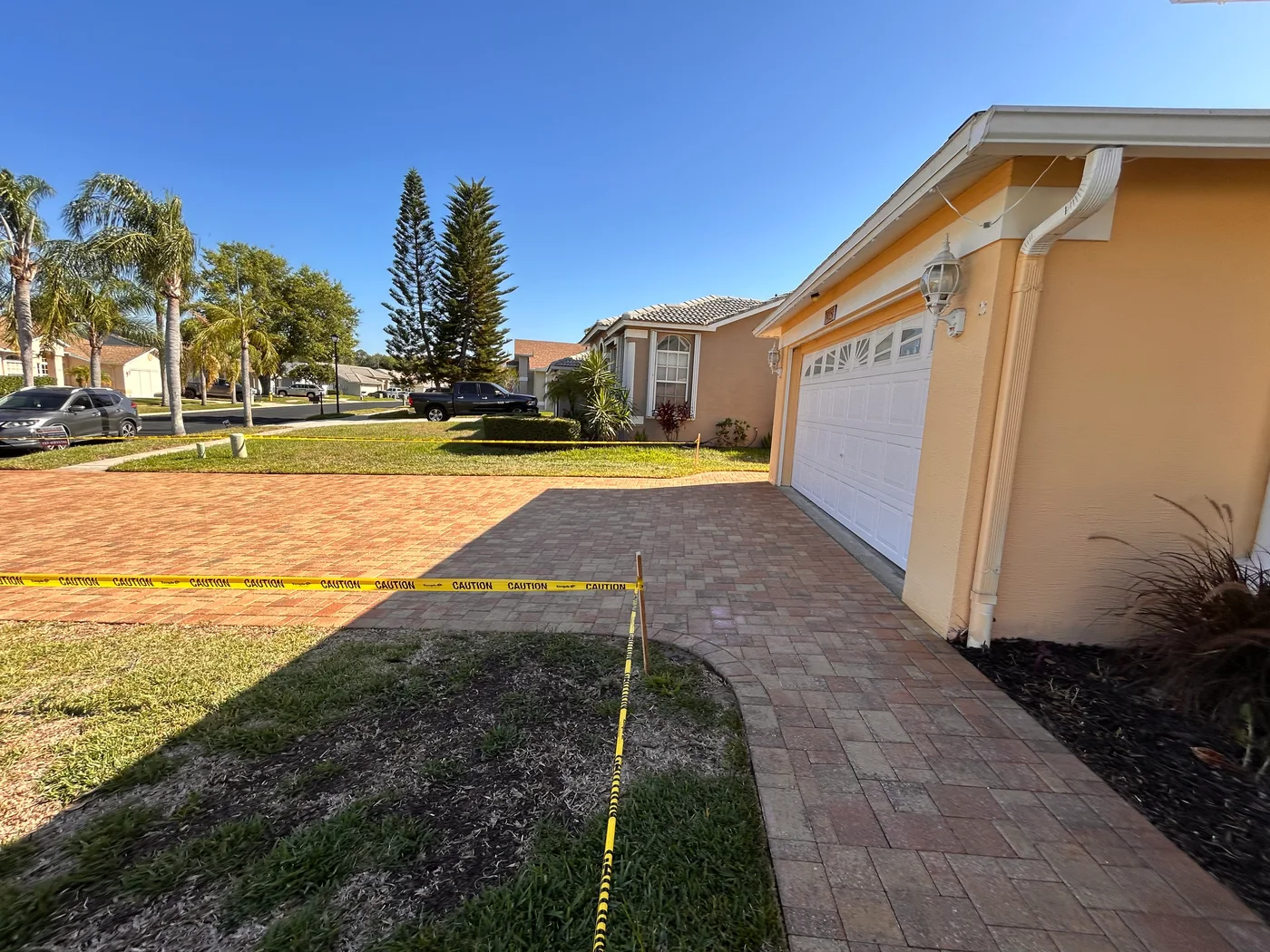
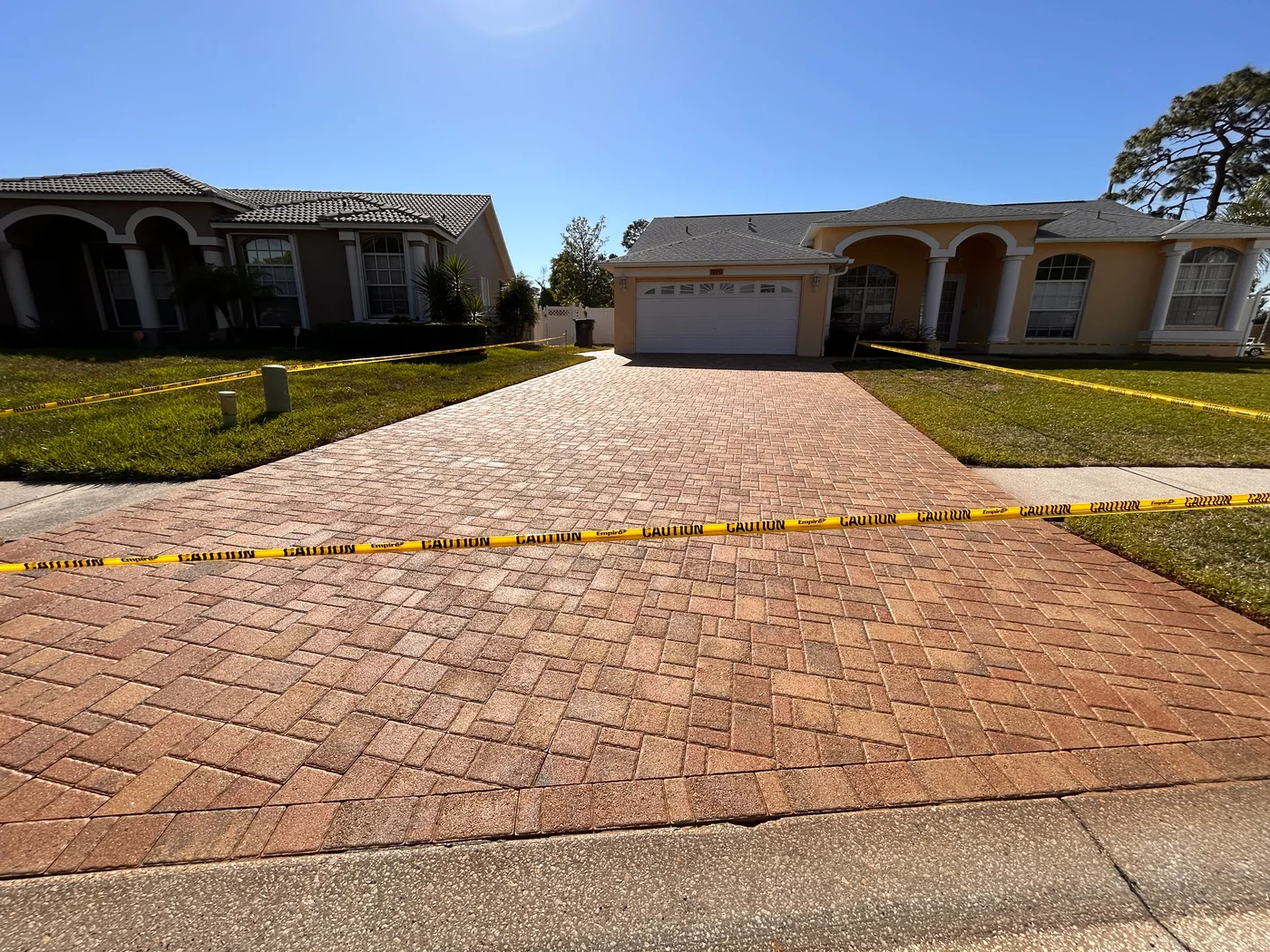
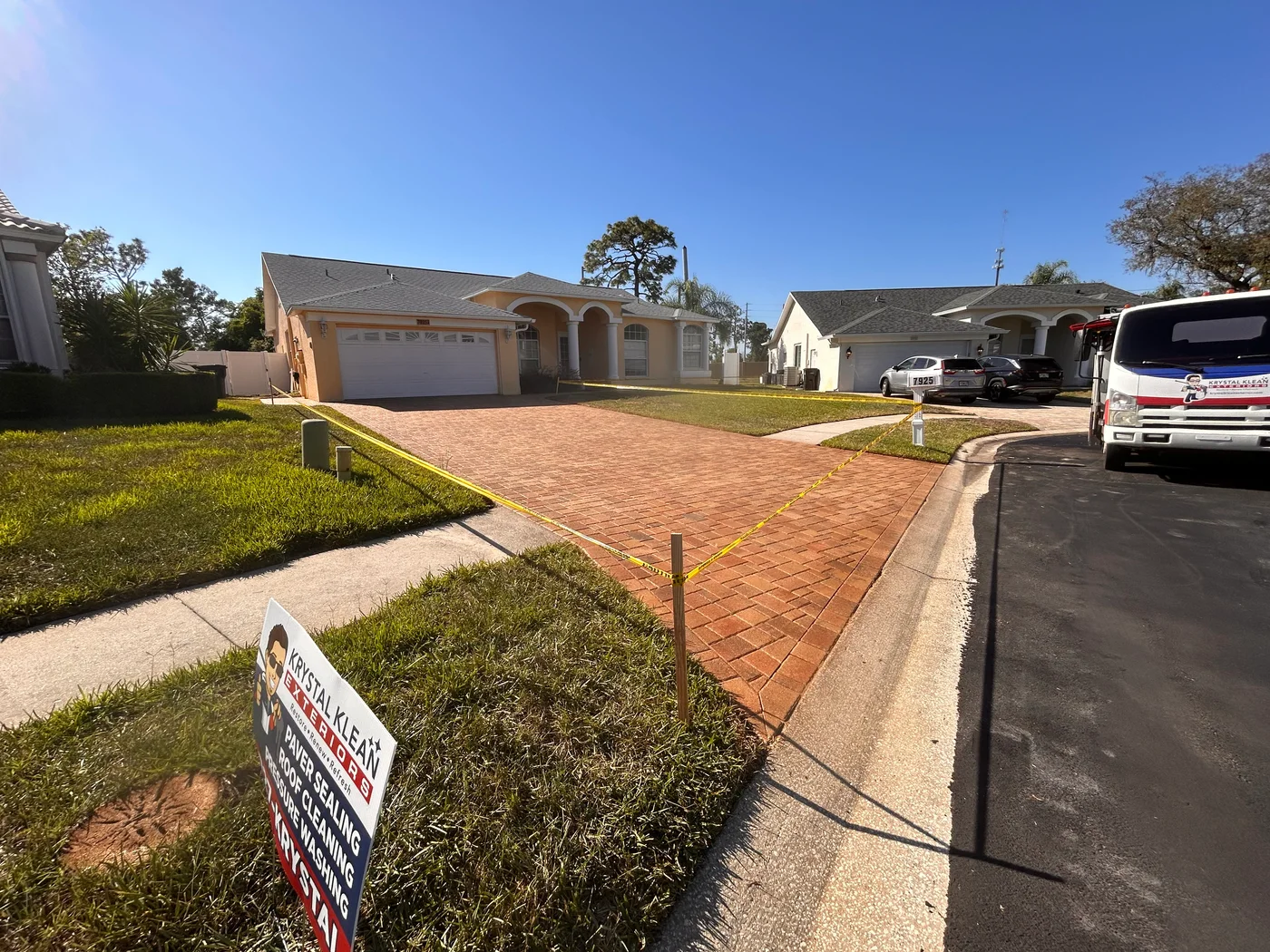
Photo note: The Tarpon Springs details above come from the completed project record. The gallery below shows one separate three-coat driveway and patio project completed by Krystal Klean Exterior in nearby New Port Richey. All three photographs are from that same New Port Richey job.


What the homeowner did after completion
The final result met the homeowner's expectations, and she enrolled in the maintenance program immediately and prepaid for the next service. She later hired Krystal Klean Exterior to complete work at other properties as well.
That maintenance plan matters. Once the pavers and joint sand are properly restored, future visits should focus on cleaning mold, mildew and efflorescence, then refreshing the protective top coats as the color enhancement and sheen begin to fade. Maintaining a correct system is less expensive than repeatedly stripping failed coatings and rebuilding washed-out joints.
How we decide between maintenance, resealing and full stripping
- Leave the coating alone: water still beads, the color remains enhanced, the joints are solid and the elements are not damaging the surface.
- Clean and re-sand: the pavers are newer or consistently maintained, the coating is stable, and the main need is cleaning or joint maintenance.
- Clean, re-sand and seal: the existing system is sound but needs renewed protection and color enhancement.
- Strip and restore: the sealer has failed, moisture or efflorescence is trapped underneath, the finish is cloudy or peeling, or movement and base problems must be repaired first.
Why experience matters on a paver restoration
Krystal Klean Exterior was founded in 2014 after two years working for other pressure-washing companies, carrying forward a family trade history that began when Justin's father started Crystal Clean in 1993. Our technicians are Trident Master Certified and have completed manufacturer training through Ure-Seal and INSECO. Justin also trains other contractors on cleaning, sanding and sealing pavers.
Our Housecall Pro history shows more than 3,700 paver jobs completed in the past five years. That volume matters because pavers do not all absorb water, hold sand or respond to old coatings the same way. The inspection determines the process; the process should never be guessed from a stock package.
Need your pavers inspected?
If your driveway is shifting, the joints are washing out, or an old coating is white, cloudy or peeling, send one wide photo, one close-up of the joints and one photo of the worst area to 727-579-7825. We will tell you whether the next step is maintenance, cleaning and re-sanding, paver sealing, or a full stripping and restoration estimate.
For local service details, see our Tarpon Springs paver sealing page.